
For nearly two decades, Chinese families sent more children to American colleges than any other country did. Then, around 2020, the line on the chart bent. Numbers dropped, India pulled ahead, and headlines started asking whether the U.S.-China education pipeline was breaking down. So is it?
Not really. It’s just gotten more complicated, and figuring out why matters for universities, agents, and any family currently weighing the decision.
Academic quality, broader majors, and long-term career payoff
Chinese students choose U.S. universities mainly because American higher education offers more flexibility in choosing a major, a stronger global reputation for top-tier schools, and research and career opportunities that are harder to access at home.
Family wealth and a shrinking pool of top university seats in China add pressure on the supply side, while political tension, cost, and safety concerns have started pushing some families toward the U.K., Hong Kong, Singapore, Canada, and Australia instead.
That’s the short version. The longer one involves generational shifts, economic anxiety, and a college entrance exam system that many Chinese parents openly say they want their kids to avoid.
How big is the Chinese student population in the U.S., really
265,919. That’s how many Chinese students studied in the U.S. during the 2024/25 academic year, according to the Institute of International Education’s Open Doors 2025 Report.
It sounds like a lot, and it is, but it’s also a 4% drop from the year before, and the third straight year of decline since China’s pandemic-era peak. India passed China as the top sending country in 2023/24, the first time that had happened since 2009, and it has held that lead ever since.
| Academic year | Chinese students in the U.S. | Change |
| 2013/14 | 274,439 | +17% |
| 2019/20 | 372,532 | peak year |
| 2023/24 | 277,398 | -4% |
| 2024/25 | 265,919 | -4% |
China and India together still account for more than half of all international students in the country. Chinese students also remain the top sending group specifically for undergraduate and non-degree programs, a detail that gets lost in the “India overtook China” headlines but matters a lot to admissions offices building a class.
Why the U.S. still appeals to Chinese families
Ask five different Chinese families why they picked an American university and you’ll likely hear five different answers, one about prestige, one about a specific professor, one about a cousin who went first. But underneath the variety, a few patterns keep showing up.
An education system built around choice, not one exam

China’s National College Entrance Exam, the gaokao, largely decides which university and which major a student gets.
There’s little room to explore before committing. Jayden Guan, a Chinese engineering student who enrolled at the University of Illinois, put it simply in a BBC interview: he turned down a spot at a Shanghai university because the American school let him study whatever he wanted.
That single decision captures most of what draws Chinese undergraduates to the U.S. in the first place. American universities let students declare a major later, switch fields, and combine subjects in ways the Chinese system doesn’t easily allow.
Rankings and research access
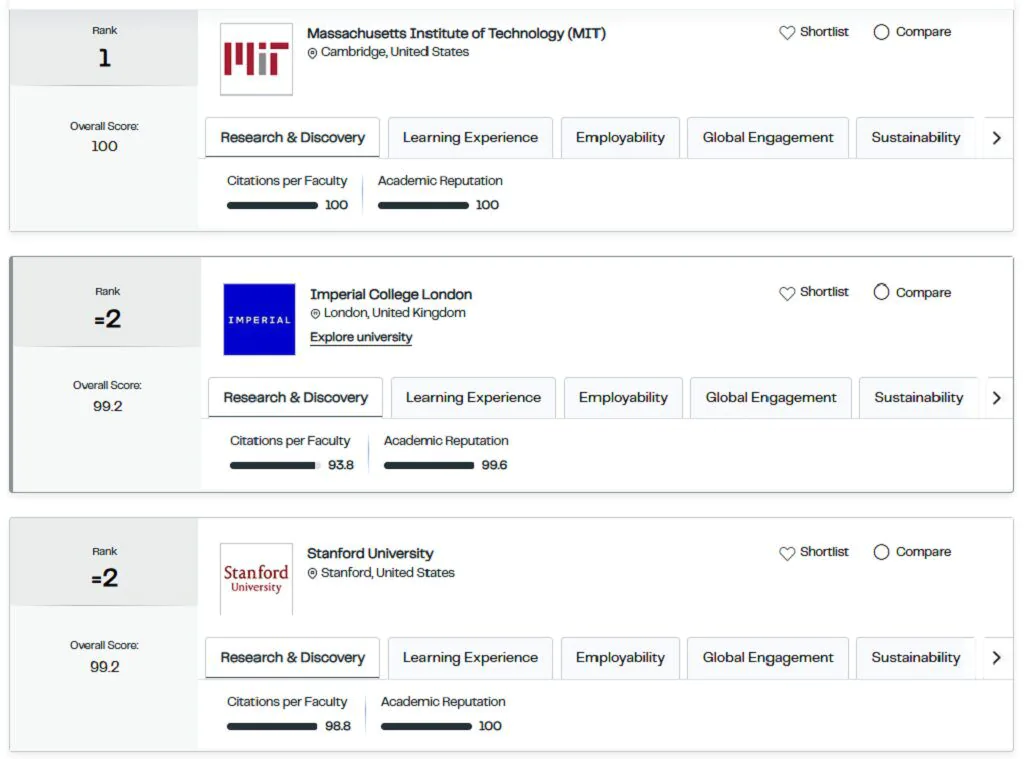
Only a small number of Chinese universities land in global top-100 rankings. Does that gap actually change where families send their kids? Largely, yes.
Families chasing a globally recognized degree, plus access to labs, faculty, and research funding that Chinese institutions can’t yet match, look abroad. It’s one reason business and STEM programs draw such a large share of Chinese applicants.
A worldview outside a single system
Peer-reviewed research from the Journal of International Students surveyed Chinese students directly and found something that runs against the assumption that cost or admissions ease drives the decision.
Students ranked “gaining a new perspective on my own country” as their strongest motivation for studying in the U.S., ahead of both. They weren’t running from China. They wanted a vantage point they couldn’t get by staying.
Family investment and the one-child generation
Smaller families concentrated more of their savings into one or two children’s education. Parents who came of age during China’s economic boom in the 1990s and 2000s now want their kids to have options they didn’t.
One mother interviewed by the Los Angeles Times described it this way: she and her husband started planning their daughter’s American education before the girl was even born, and kept reminding her of that plan whenever school got hard. That kind of long-horizon planning shows up again and again in family interviews.
Why the numbers have softened since 2020
If the appeal hasn’t disappeared, why the steady decline? A few forces are working against the old growth pattern at the same time:
- Cost. Tuition at flagship private universities now regularly tops $65,000 to $70,000 a year before housing and food, and a weaker yuan makes that bill heavier for Chinese families.
- Political friction. Trade tension, visa scrutiny, and rhetoric from both governments have made some families nervous about safety and long-term prospects in the U.S.
- Competing destinations. The U.K. has overtaken the U.S. as the top study-abroad choice for Chinese students in surveys from New Oriental, and Hong Kong, Singapore, Canada, and Australia have all gained ground thanks to proximity, flexible visas, or lower cost.
- A tougher domestic job market for returnees. Chinese employers are less consistently rewarding a U.S. degree than they were a decade ago, which changes the return-on-investment math for some families.
- A stronger domestic alternative. More seats have opened at strong Chinese universities, narrowing the gap that used to push top students abroad by default.
None of this means interest has collapsed. Families are running the numbers more carefully than they used to, weighing a U.S. degree against real alternatives instead of treating it as the default choice it once was.
What this means for schools, agents, and families
Universities recruiting Chinese students are adjusting rather than retreating. Many are diversifying recruitment toward India, Vietnam, and Nigeria while still investing in China-based outreach, since the highest-scoring applicants there remain competitive candidates. Meanwhile the paperwork side of the process hasn’t gotten any simpler. Application materials, transcripts, and supporting documents often need professional translation and localization to meet admissions standards, and agencies handling these applications regularly turn to specialized Chinese translation services to make sure academic records and personal statements read naturally in English without losing meaning.
For students who do make the move, the transition brings its own practical questions. Many arrive on F-1 visas with strict limits on off-campus work, so it helps to understand what part-time jobs are actually realistic for college students before assuming a campus job will cover living costs.
FAQ
Conclusion
The families still choosing a U.S. degree today are doing more homework than the ones who chose it a decade ago.
That’s a healthier dynamic for everyone involved, admissions offices included, since it rewards schools and programs that actually deliver on what they promise rather than coasting on reputation alone.