Did you know that balance and coordination develop fastest between the ages of 6 and 12, and the type of movement kids practice during that window can shape how confidently they move for life? It is not just about strength or speed. The brain is learning how to communicate with the body, how to adjust in mid-motion, and how to stay calm while doing something unfamiliar. That is where alternative sports really shine.
Traditional team sports are great, but they are not the only path. Many kids thrive in activities that feel more individual, more playful, or less tied to competition.
Below is a carefully selected list of alternative sports for kids that specifically support coordination, balance, body awareness, and focus, without overwhelming pressure.
1. Rock climbing builds full-body coordination through problem-solving
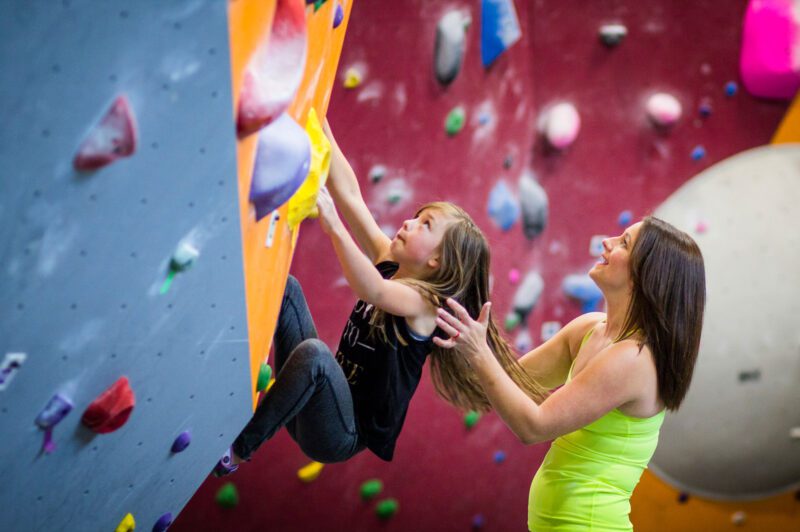
Rock climbing asks kids to think with their bodies. Every move requires coordination between hands, feet, eyes, and balance, often at the same time. Instead of repeating a single motion, children adapt constantly, which is exactly what develops real-world coordination.
In climbing gyms designed for kids, routes are color-coded and scaled to different skill levels. This makes progress visible and motivating without comparing children to one another.
Key coordination benefits include:
- Learning to shift weight smoothly from feet to hands
- Improving grip control and spatial awareness
- Developing balance while reaching and twisting
Climbing engages both hemispheres of the brain at once, combining physical movement with decision-making and sequencing.
Because climbing is self-paced, kids who dislike noisy team sports often feel more comfortable here, and that comfort allows skills to develop faster.
2. Archery improves balance, posture, and focus in subtle ways
At first glance, archery looks calm and almost still, but that is exactly why it works so well for coordination. Holding proper posture, stabilizing the body, and releasing with control all depend on fine motor skills and balance working together.
Many parents are surprised to learn how accessible youth archery programs have become. Structured lessons like those found through archery instruction programs help children learn safe technique while building confidence step by step.
What archery develops especially well:
- Core stability through upright posture
- Hand-eye coordination with controlled movement
- Balance during sustained stillness
Unlike fast-paced sports, archery teaches kids how to slow down, breathe, and control their bodies under focus. That ability carries over into school, other sports, and everyday movement.
3. Martial arts sharpen coordination through structured movement patterns
Martial arts such as karate, taekwondo, or judo are built on precise, repeatable movements. Kids learn how to move arms and legs independently while maintaining balance and awareness of their center of gravity.
Classes are typically organized by age and skill, allowing children to progress at a steady pace. There is structure, but also a strong emphasis on personal improvement rather than winning.
Core coordination gains include:
- Timing punches and kicks with foot placement
- Learning controlled transitions between stances
- Improving reaction speed without losing balance
- Developing bilateral coordination on both sides of the body
The added benefit is discipline. Kids learn how to control their movements intentionally, which is often more valuable than raw athleticism.
4. Parkour teaches balance through natural, adaptable movement
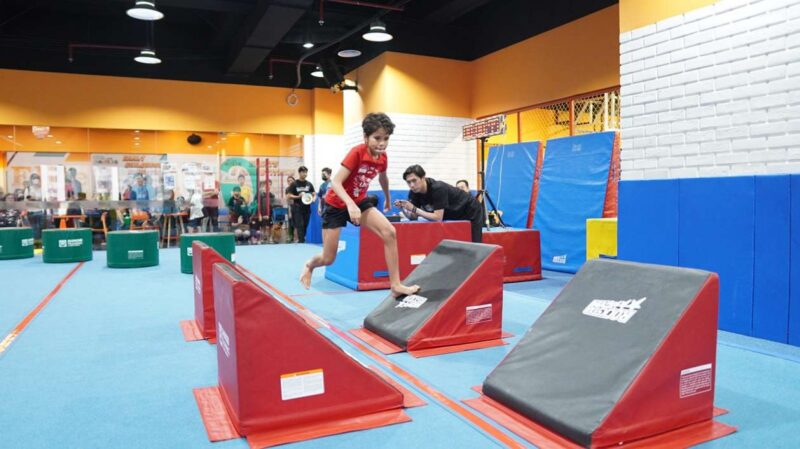
Parkour looks like play, and for kids, that is a big advantage. Running, jumping, vaulting, and landing are all natural movements, but parkour refines them with technique and awareness.
In supervised classes or youth programs, safety is emphasized first. Children learn how to land softly, roll correctly, and judge distances realistically.
Parkour supports coordination by:
- Training precise foot placement on varied surfaces
- Encouraging smooth transitions between movements
- Improving balance during jumps and landings
Because there are no scores or teams, kids focus on mastering movement rather than competing. That makes parkour especially appealing to children who enjoy exploration and creativity.
5. Gymnastics builds balance and coordination from the ground up
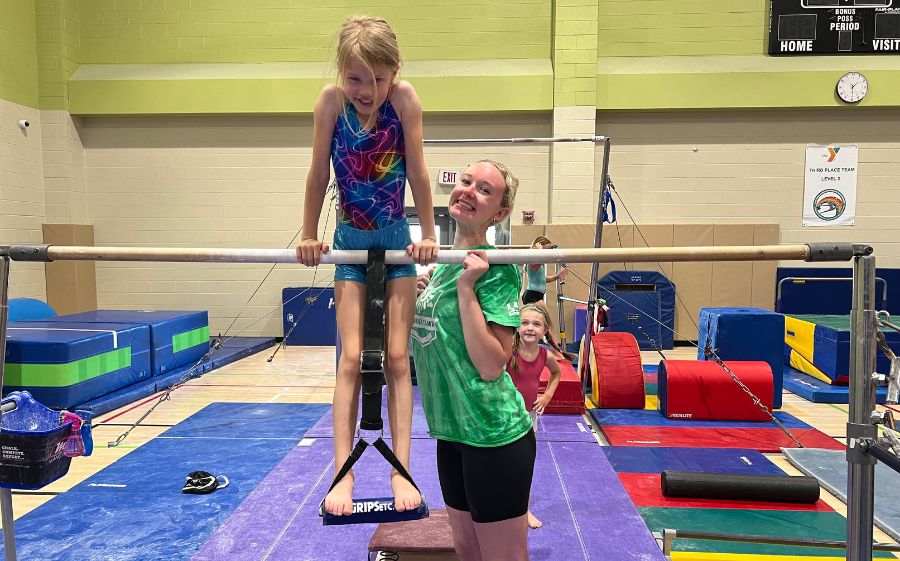
Gymnastics is one of the most comprehensive coordination sports available. Even at beginner levels, kids learn how to control their bodies in space, upside down, sideways, and in motion.
Basic floor work, beams, and bars are scaled for young children, making early success possible without excessive strain.
Main coordination elements developed:
- Balance on narrow or elevated surfaces
- Controlled rotations and body alignment
- Strength-to-balance transitions
| Gymnastics skill | Coordination focus | Long-term benefit |
| Balance beam | Static and dynamic balance | Postural control |
| Floor rolls | Spatial awareness | Safer movement |
| Handstands | Upper body coordination | Body confidence |
Gymnastics also builds a strong foundation that supports nearly every other sport later on.
6. Slacklining challenges balance in a fun, low-pressure way
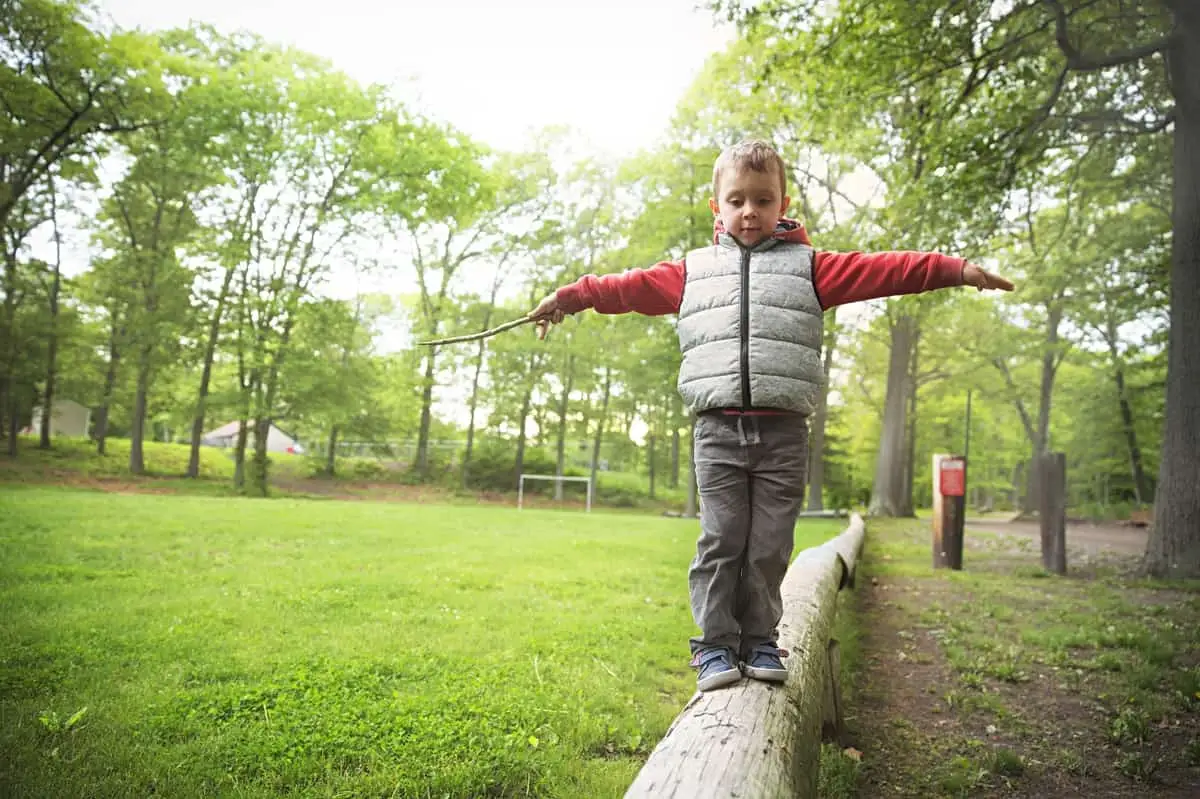
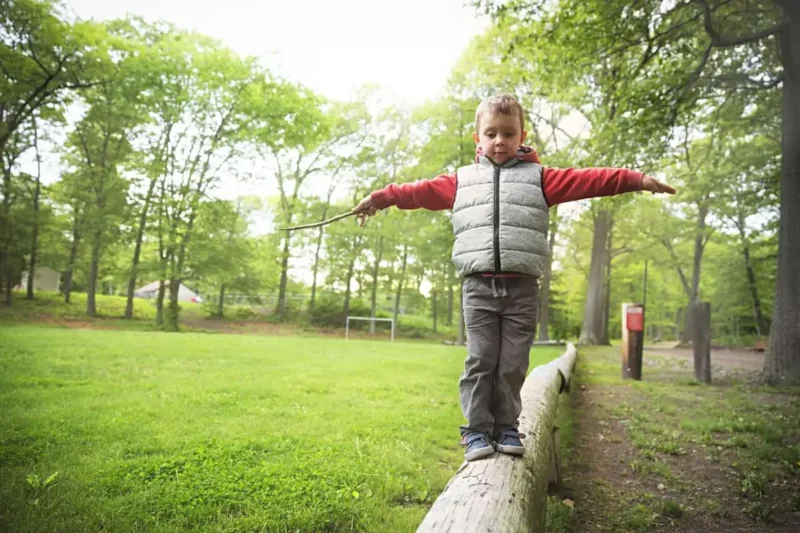
Slacklining is simple in concept but powerful in effect. Walking or standing on a flexible line forces the body to make constant micro-adjustments, which rapidly improves balance and coordination.
For kids, slacklines are usually set low to the ground and often combined with games or challenges to keep things playful.
Slacklining helps children:
- Develop ankle and core stability
- Improve focus while moving slowly
- Learn balance correction through trial and error
Interesting fact:
Just a few minutes of slacklining activates more stabilizing muscles than many traditional balance exercises.
Because progress can happen quickly, kids often feel a strong sense of achievement early on.
7. Dance styles enhance rhythm, balance, and body awareness
Dance, especially styles like contemporary, hip hop, or ballet, is a powerful coordination tool. Kids learn how to move with rhythm while controlling posture, timing, and direction.
Unlike competitive sports, dance allows for self-expression, which can be especially important for children who feel self-conscious in traditional athletics.
Coordination improvements include:
- Synchronizing movement with music
- Controlling balance during turns and jumps
- Improving flexibility alongside coordination
Dance also teaches kids how to listen to their bodies. That awareness often reduces clumsiness and increases confidence in everyday movement.
8. Skateboarding develops balance through controlled instability
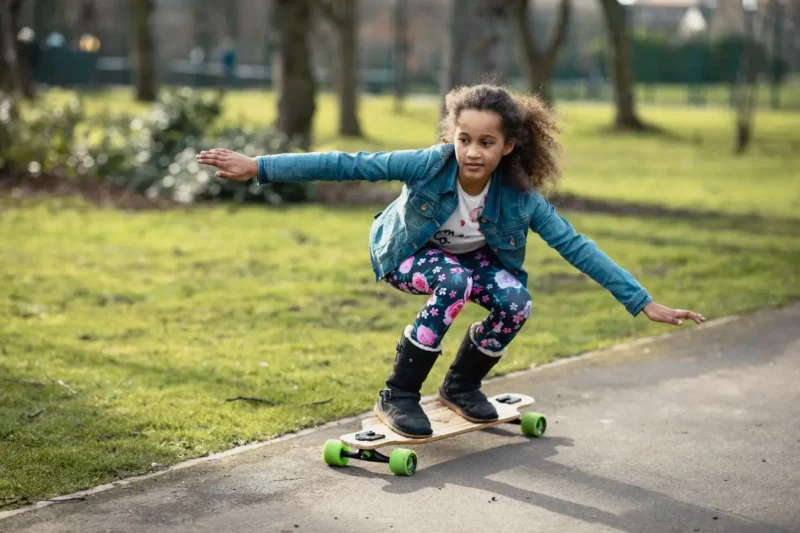
Skateboarding constantly challenges balance. The moving board forces kids to adjust their posture, foot placement, and weight distribution in real time.
Beginner skateboarding focuses on standing, pushing, and gentle turns before tricks ever come into play. Protective gear and smooth surfaces are essential at the start.
What skateboarding trains effectively:
- Dynamic balance on a moving surface
- Coordination between legs and upper body
- Reaction timing during small corrections
Because progress is visible and personal, kids often stay motivated without needing structured competition.
Closing Thoughts
Alternative sports offer something traditional programs sometimes miss: space for individuality. When kids find a movement style that fits how they think and feel, coordination and balance develop almost naturally. The key is exposure. Let children try different activities, notice where they feel confident, and support that curiosity.
Strong coordination is not built overnight. It grows through varied movement, patience, and enjoyment. Choosing the right alternative sport can turn physical development into something kids genuinely look forward to, and that makes all the difference.