
Aerospace engineering defines the edge of human capability. It merges physics, mathematics, materials science, computer engineering, and propulsion to design the aircraft and spacecraft that shape global defense, space exploration, and commercial transport. As of 2025, the United States hosts over 70 accredited aerospace engineering programs, but only a select few combine scale, research funding, and graduate outcomes at a level that consistently drives the industry forward.
According to the U.S. Bureau of Labor Statistics (BLS), the median annual salary for aerospace engineers reached $130,720 in 2024, with projected job growth of 6% between 2023 and 2033. Over 62,000 professionals currently work in the field across the U.S., with concentrations in California, Texas, and Washington. The universities listed below educate the majority of engineers entering NASA, SpaceX, Lockheed Martin, Boeing, and Blue Origin.
These programs were selected based on five quantifiable factors: (1) research expenditures, (2) facilities, (3) industry partnerships, (4) graduation outcomes, and (5) curriculum innovation.
1. Massachusetts Institute of Technology (MIT), Cambridge, Massachusetts
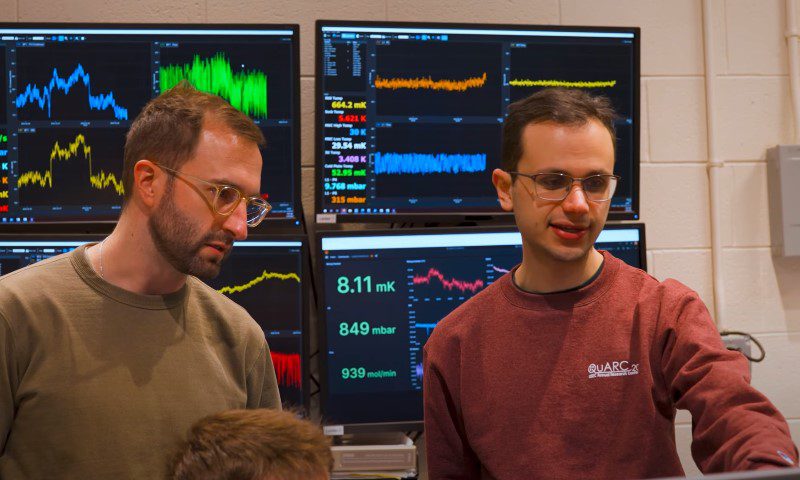
MIT’s Department of Aeronautics and Astronautics (AeroAstro) represents the global benchmark for aerospace education. It consistently ranks #1 worldwide in the QS and U.S. News rankings. The department operates within a $70 million annual research budget, with projects covering propulsion, satellite navigation, and human-spaceflight systems. Students gain access to the Gas Turbine Laboratory, the Space Propulsion Laboratory, and the Small Satellite Center, all of which conduct joint research with NASA and the U.S. Air Force.
MIT’s curriculum is structured into three tiers: foundational engineering sciences, aerospace system design, and specialized electives (such as guidance and control, fluid dynamics, and plasma physics). Roughly 200 undergraduates and 250 graduate students are enrolled at any given time. MIT’s alumni network includes more than 40 astronauts and thousands of senior engineers across leading space and defense firms.
MIT Aerospace Program Data (2025)
| Metric | Value |
| Annual Research Funding | $70 million |
| Undergraduate Enrollment | 200 |
| Graduate Enrollment | 250 |
| Student-to-Faculty Ratio | 5:1 |
| Median Starting Salary | $95,000 |
| Research Partnerships | NASA, DARPA, Boeing, Lockheed Martin |
| Distinct Facilities | Gas Turbine Lab, Small Satellite Center, Wright Brothers Wind Tunnel |
2. Georgia Institute of Technology, Atlanta, Georgia
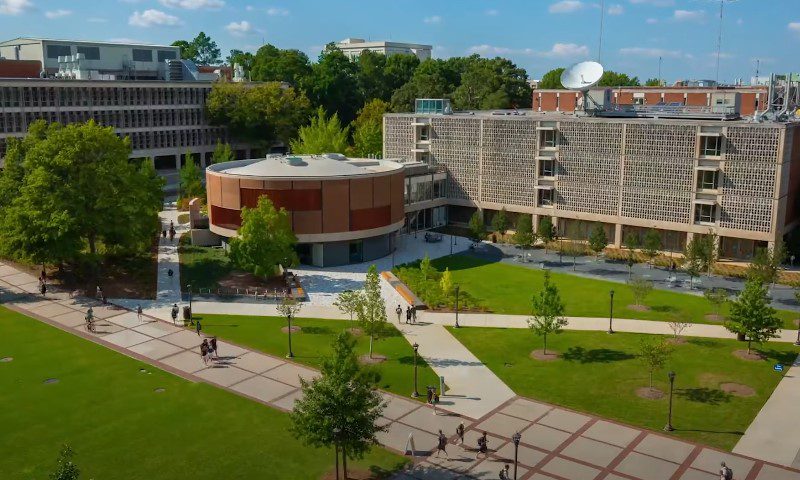
Georgia Tech’s Daniel Guggenheim School of Aerospace Engineering ranks as the top public aerospace program in the U.S. and second overall behind MIT. It is the nation’s largest aerospace department, hosting over 1,200 undergraduates and 600 graduate students. Research expenditures total about $55 million annually, funded by NASA, the U.S. Air Force, and private sector partners.
Students engage in large-scale projects through the Aerospace Systems Design Laboratory, Hypersonics Research Center, and Space Systems Design Laboratory. Co-op placements are integrated into the curriculum, and over 75 % of students graduate with direct industry experience. Georgia Tech’s propulsion and aerodynamics research is world-class, and its alumni occupy senior engineering roles across every major U.S. aerospace company.
Georgia Tech Aerospace Program Data (2025)
| Metric | Value |
| Annual Research Funding | $55 million |
| Undergraduate Enrollment | 1,200 |
| Graduate Enrollment | 600 |
| Median Starting Salary | $87,000 |
| Job Placement within 6 Months | 96 % |
| Notable Research Areas | Hypersonics, UAV Design, Aerodynamics, Space Systems |
| Facilities | Aerospace Systems Design Lab, Propulsion Test Facility, Mach 5 Wind Tunnel |
3. Stanford University, Stanford, California

Stanford’s aerospace program thrives on innovation and interdisciplinarity. Located near Silicon Valley and NASA Ames Research Center, the program focuses on autonomous flight systems, advanced materials, and computational fluid dynamics. The university maintains joint labs with aerospace start-ups and technology firms, giving students immediate access to applied research and venture creation opportunities.
The average class size is small, emphasizing design thinking and project-based courses. Roughly 400 students study aerospace at Stanford annually. The Autonomous Systems Lab, Aero/Astro Research Center, and Flight Robotics Facility are central to its modern curriculum.
Stanford Aerospace Program Data (2025)
| Metric | Value |
| Annual Research Funding | $48 million |
| Enrollment | 400 |
| Student-to-Faculty Ratio | 7:1 |
| Median Starting Salary | $102,000 |
| Primary Industry Links | NASA Ames, SpaceX, Blue Origin, Joby Aviation |
| Specializations | Computational Aerodynamics, Autonomous Systems, Space Robotics |
| Facilities | Flight Robotics Facility, Aerodynamic Testing Lab, High-Performance Simulation Cluster |
4. Purdue University, West Lafayette, Indiana
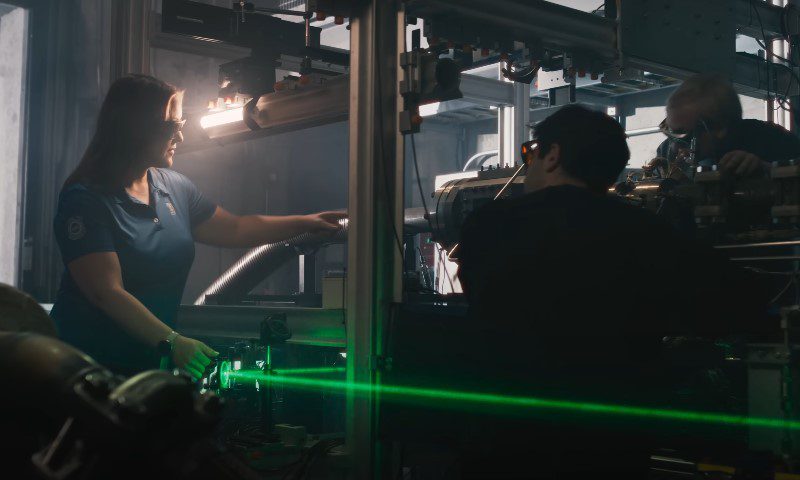
Purdue’s School of Aeronautics and Astronautics is synonymous with American aerospace history. It has produced 26 astronauts, including Neil Armstrong, Gus Grissom, and Janice Voss. Purdue’s facilities include Zucrow Laboratories, the largest university-based propulsion research complex in the world, and the Maurice J. Zucrow Combustion Lab, where turbine and rocket engines are developed and tested.
The department enrolls around 900 students and runs an annual research budget of $40 million. Purdue’s applied engineering model emphasizes laboratory experimentation, systems integration, and full-scale project design. Its partnership with Rolls-Royce and NASA ensures students experience direct exposure to propulsion development programs.
Purdue Aerospace Program Data (2025)
| Metric | Value |
| Annual Research Funding | $40 million |
| Undergraduate Enrollment | 600 |
| Graduate Enrollment | 300 |
| Job Placement | 94 % |
| Average Starting Salary | $82,000 |
| Distinct Strength | Propulsion Systems, Hypersonic Testing |
| Key Facilities | Zucrow Lab, Beering Flight Simulation Center, Composites Fabrication Facility |
5. California Institute of Technology (Caltech), Pasadena, California
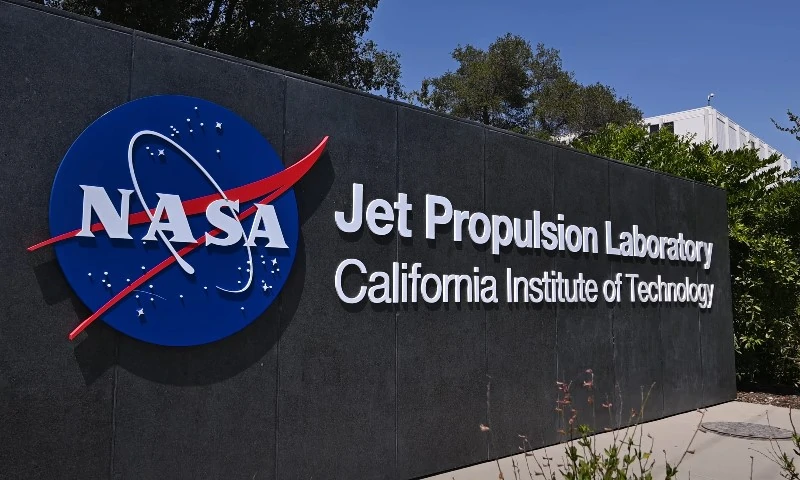
Caltech delivers unmatched access to space research through its direct affiliation with NASA’s Jet Propulsion Laboratory (JPL). The Division of Engineering and Applied Science integrates structural mechanics, fluid dynamics, and propulsion physics into its aerospace concentration. Caltech’s research is small-scale but profoundly deep, involving plasma propulsion, orbital mechanics, and spacecraft materials science.
Only about 150 students are enrolled in aerospace studies at any time, and nearly 80 % pursue postgraduate research or direct placement into JPL projects. Caltech’s Guggenheim Aeronautical Lab and GALCIT Wind Tunnels are among the oldest continuously operated facilities of their kind in the world.
Caltech Aerospace Program Data (2025)
| Metric | Value |
| Annual Research Funding | $50 million |
| Total Enrollment | 150 |
| Student-to-Faculty Ratio | 3:1 |
| Research-to-Student Ratio | 1:1 |
| Graduate Research Placement | 80 % |
| Partner Institution | NASA JPL |
| Core Focus | Propulsion, Spacecraft Materials, Aerodynamics |
| Facilities | GALCIT Wind Tunnels, Space Structures Lab, Plasma Propulsion Chamber |
6. University of Michigan – Ann Arbor, Ann Arbor, Michigan
Michigan’s Department of Aerospace Engineering stands as one of the nation’s oldest, established in 1914. It remains a top-five program with major research strength in materials, controls, and plasma propulsion. The department’s FXB Building houses laboratories for autonomous aerial systems, composite materials, and computational aerodynamics.
Research funding totals roughly $43 million annually, with major contracts from the U.S. Air Force and NASA Glenn Research Center. The university maintains industry partnerships with Boeing, General Electric, and Northrop Grumman. Michigan graduates report median starting salaries near $86,000, and about 40 % continue into graduate programs.
University of Michigan Aerospace Program Data (2025)
| Metric | Value |
| Annual Research Funding | $43 million |
| Undergraduate Enrollment | 400 |
| Graduate Enrollment | 250 |
| Starting Salary | $86,000 |
| Placement within 6 Months | 95 % |
| Research Specialties | Plasma Propulsion, Materials Engineering, Flight Controls |
| Facilities | FXB Building Wind Tunnels, Plasma Lab, Space Systems Research Center |
7. Embry-Riddle Aeronautical University, Daytona Beach, FL / Prescott, AZ
View this post on Instagram
Embry-Riddle is the only U.S. university built exclusively around aviation and aerospace education. Its College of Engineering delivers degrees in aerospace, aeronautics, and astronautics with integrated flight experience. The university operates the largest collegiate flight training fleet in North America and includes programs that let students combine engineering with pilot certification.
Enrollment across both campuses exceeds 8,000 students, supported by $28 million in research funding. Embry-Riddle’s laboratories include the Wind Tunnel Complex, the Space Traffic Management Center, and a High-Altitude Balloon Launch Facility. The average graduate earns $78,000 in their first year and enjoys a 97 % placement rate in aerospace, defense, or aviation sectors.
Embry-Riddle Aerospace Program Data (2025)
| Metric | Value |
| Annual Research Funding | $28 million |
| Enrollment (Both Campuses) | 8,000 |
| Job Placement | 97 % |
| Average Starting Salary | $78,000 |
| Core Focus | Aeronautics, Avionics, Space Traffic Management |
| Facilities | Flight Line, High-Altitude Balloon Lab, Simulation Complex |
| Distinction | Combines Aerospace Engineering with FAA-Approved Pilot Training |
Comparative Overview
| University | Annual Funding | Enrollment | Starting Salary | Industry Partnerships | Primary Strength |
| MIT | $70M | 450 | $95K | NASA, DARPA, Boeing | Research Depth, Propulsion |
| Georgia Tech | $55M | 1,800 | $87K | Gulfstream, Lockheed Martin | Scale, Public Access |
| Stanford | $48M | 400 | $102K | NASA Ames, SpaceX | Innovation, Autonomy |
| Purdue | $40M | 900 | $82K | Rolls-Royce, NASA | Propulsion Testing |
| Caltech | $50M | 150 | $97K | NASA JPL | Spacecraft R&D |
| Michigan | $43M | 650 | $86K | Boeing, GE | Plasma Propulsion, Systems |
| Embry-Riddle | $28M | 8,000 | $78K | FAA, U.S. Air Force | Applied Flight Systems |
Industry Outlook and Educational Direction
The aerospace industry is accelerating into the 2030s with major shifts in propulsion, sustainability, and automation. Electric aircraft systems, reusable rockets, and satellite networks are now central to research agendas. Across top U.S. institutions, undergraduate research participation exceeds 70 %, a figure that has doubled in less than a decade.
Federal agencies fund more than $900 million annually in university aerospace R&D. NASA’s University Leadership Initiative (ULI) supports programs at Georgia Tech, Purdue, and Michigan for sustainable propulsion and hybrid-electric flight. Meanwhile, the Department of Defense invests in hypersonic testing infrastructure across MIT, Caltech, and Purdue.
Final Assessment
In 2025, the U.S. continues to dominate global aerospace education. MIT and Caltech lead in cutting-edge research and theory. Georgia Tech and Purdue define the backbone of public-sector technical education. Stanford drives the intersection of aerospace and automation. Michigan balances tradition with modern propulsion research. Embry-Riddle supplies the specialized aviation expertise industry still requires.